Cart
0
🎁 BUY 2 GET 1 FREE
You may also like

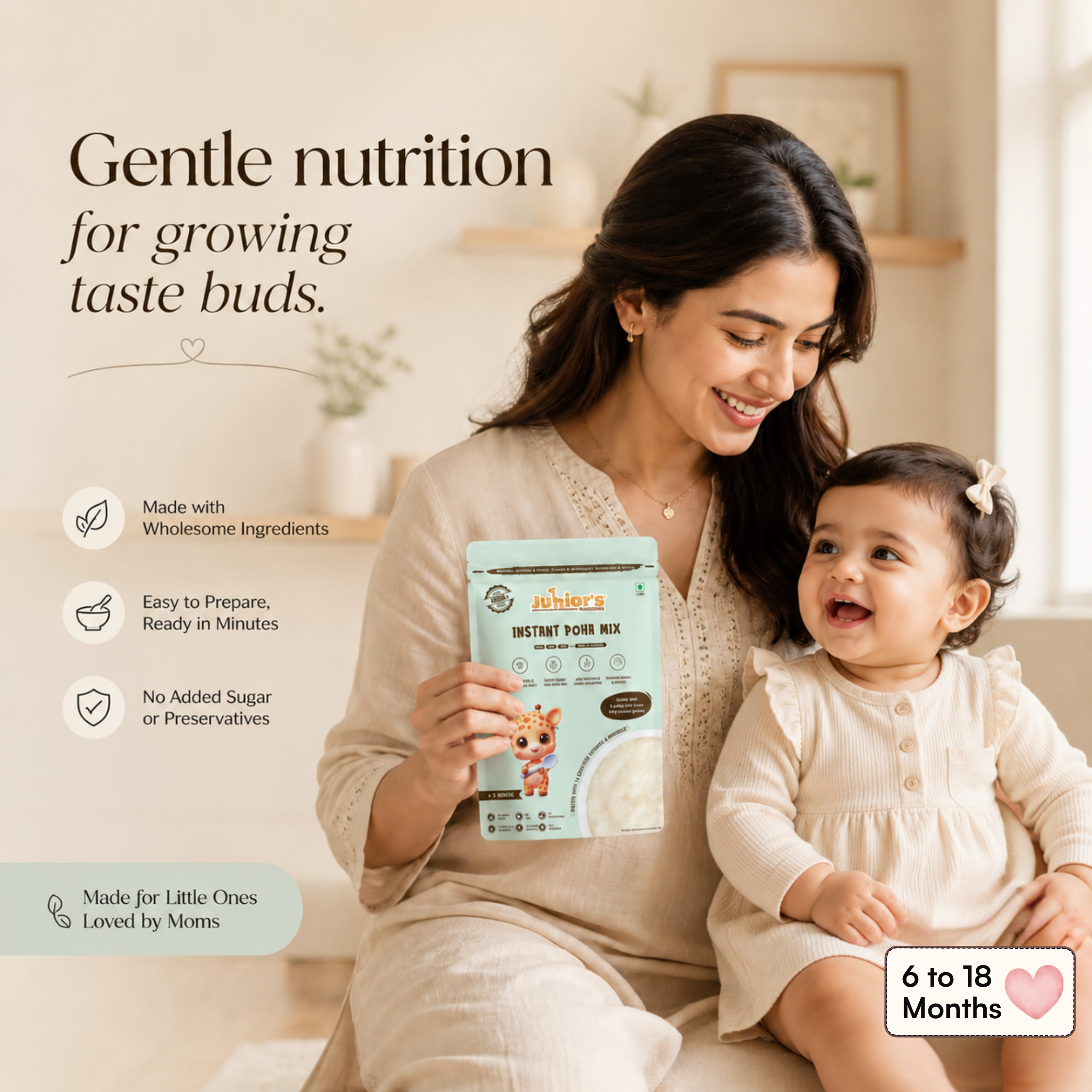




Ragi has fed Indian babies for centuries. Today, many parents choose sprouted ragi for babies because it is gentler on tiny tummies. It also cooks fast and works in many recipes.
This guide keeps things simple. You will learn what makes it special, what it contains and how to cook it. You will also see how homemade flour compares with a ready one.
Ragi is finger millet. To sprout it, makers soak the grain until it starts to grow. Then they dry and mill it into flour.
This step breaks down phytic acid. Phytic acid is a natural compound that blocks minerals like calcium, iron and zinc. Less phytic acid means the body can absorb more of these minerals.
Here is how it compares with plain ragi flour:
Baby food needs extra care. That is why the Juniors Nutrition Sprouted Ragi Flour is made under a nutritionist’s guidance.
Why does this matter? A nutritionist thinks about how a child’s needs change with age. So the brand gives a simple plan for each stage, from a thin first porridge to rotis for the whole family. You do not have to guess how thick or how much.
It gives first-time parents some comfort. Still, every baby is different. Your paediatrician has the final word.
As per the brand, every 100 g of flour has:
It also has iron, zinc, potassium and other B vitamins.
Keep one thing in mind. These numbers are for 100 g. Babies eat only a spoon or two. So think of ragi as one helpful food in a varied diet.

Here is what parents like:
Ragi cannot replace breast milk or formula. It works best as part of a mixed diet.
Some parents sprout ragi at home. Others buy a ready flour. Both can work. Here is a fair look:
|
Point |
Homemade sprouted ragi flour |
Juniors Nutrition sprouted ragi flour |
|
Process |
Soak, sprout, dry, roast and grind |
Ready to cook. Sprouted and stone-milled for you |
|
Time and effort |
Takes a few days and daily care |
Open the pack and cook |
|
Ingredients |
Ragi only, if you keep it plain |
100% sprouted ragi. Nothing added |
|
Guidance |
You follow your own recipe |
Made under a nutritionist’s guidance, with an age-wise plan |
|
Hygiene |
You must dry the sprouts fully to avoid mould |
Handled by the brand |
|
Texture |
Depends on your grinder |
Fine flour from stone milling |
|
Control |
Full control over every step |
Fixed recipe |
|
Best for |
Parents who enjoy cooking and have time |
Busy parents who want a ready, planned flour |
Neither choice is wrong. Homemade gives you control. A ready flour saves time and gives you a steady result. Pick what fits your home.
The brand shares this simple plan:
Always check with your paediatrician before you start solids.
Start thin. Make it thicker as your baby grows.


The pinch of salt is for the family. Skip it for babies.
Add 1 tablespoon of flour to a banana or dates smoothie. It thickens the drink and adds nutrition. Cook or roast the flour first.

Swap 30 to 50% of regular flour with ragi flour in the batter. You get a nutty flavour and a darker colour.

Please keep these in mind:
You can find the flour on the Juniors Nutrition sprouted ragi flour page. Check the latest price and pack size there.

Sprouted ragi for babies is simple, tasty and easy to cook. You can sprout it at home or choose a ready flour made under a nutritionist’s guidance. Start with a thin porridge. Go slowly and watch your baby.
It is generally safe from 6 months. Ask your paediatrician first. Introduce it alone for 3 days.
Start with 1 tablespoon in 150 ml of liquid. Increase slowly as your baby grows.
Yes. The brand says a nutritionist guides how it is made and used across each age stage.
Both work. Homemade gives control. A ready flour saves time and is easy to use.
No. Always cook or roast ragi flour before serving.
Join our community on Instagram & Facebook for trusted nutrition tips, easy recipes, and special offers.


